Dealer to Dealer Car Transport Canada: What Dealerships Need to Know Before Moving Inventory
Are you managing dealer to dealer car transport in Canada and looking for a carrier that delivers the scheduling consistency, documentation reliability, and per-vehicle accountability that dealership operations require? Canada’s automotive retail sector moves an estimated over 1.5 million vehicles professionally across provinces every year, with dealer to dealer transfers – covering wholesale trades, inventory acquisitions, and multi-location stock balancing – representing one of the largest and most operationally demanding segments of that volume. (Source: Transport Canada — Commercial Vehicle Statistics)
Dealer to dealer car transport in Canada is fundamentally different from consumer vehicle shipping. The operational requirements – time-sensitive inventory cycles, multi-unit loads, documentation standards for dealer trades, and the need for a carrier partner that delivers consistent service across every booking – demand a direct carrier with genuine dealership transport experience. This guide covers exactly what dealer to dealer car transport involves, why the carrier you choose directly affects your dealership’s operational efficiency, and how to set up a reliable transport arrangement across Canadian provinces.
What Is Dealer to Dealer Car Transport in Canada?
Defining the Dealer to Dealer Transfer
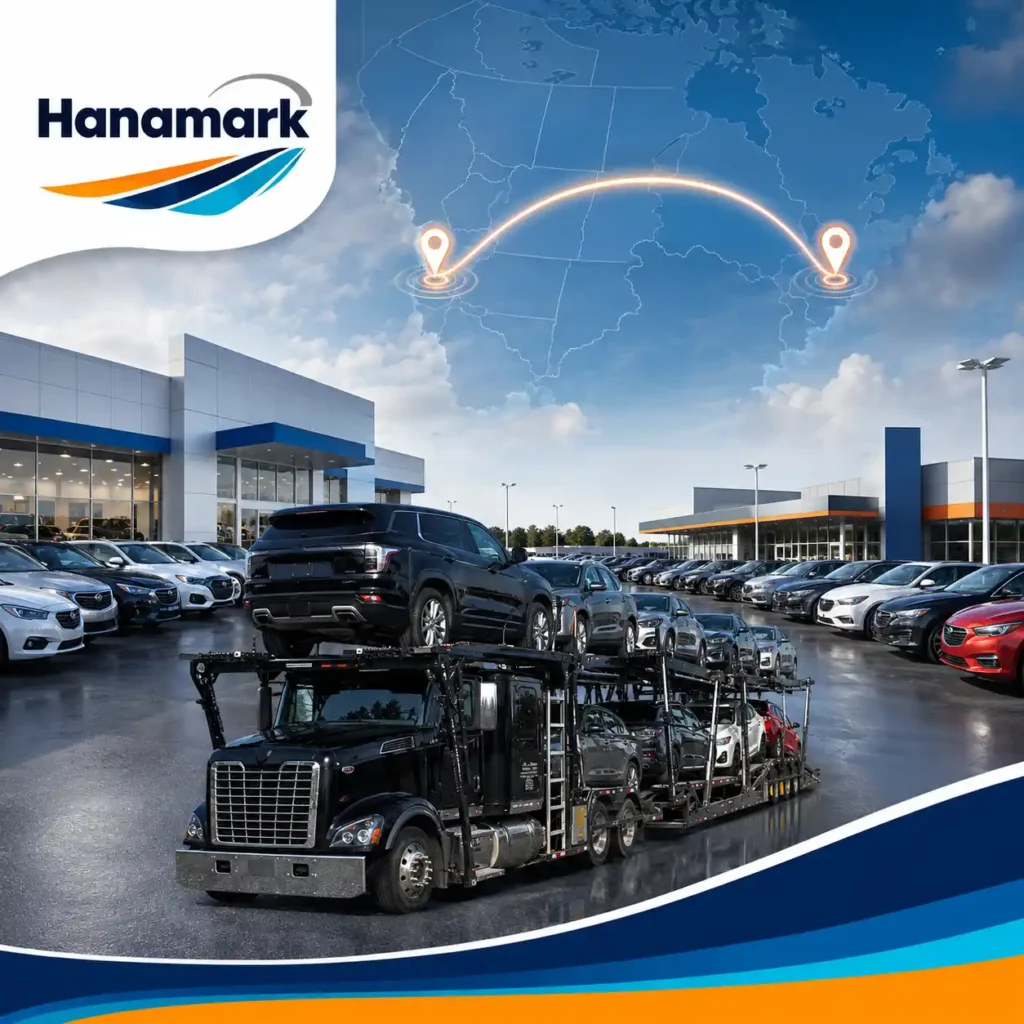
Dealer to dealer car transport in Canada refers to the professional interprovincial shipping of vehicles between two automotive dealerships – typically as part of a dealer trade arrangement, a wholesale inventory acquisition, or a multi-location stock rebalancing exercise. In a dealer trade, two dealerships exchange vehicles to fulfil customer orders that neither could complete from their own stock. In a wholesale acquisition, one dealership purchases inventory from another and requires professional transport to bring those vehicles to their location.
Dealer to dealer car transport is a high-frequency, operationally demanding activity for most Canadian automotive dealerships. Trades and acquisitions happen on tight timelines; a customer waiting for a specific vehicle does not wait indefinitely, and a dealership that cannot execute a dealer trade efficiently loses the sale. The carrier managing the dealer to dealer transport directly affects how quickly that vehicle reaches the sales lot and how reliably the whole arrangement executes.
What Makes Dealer to Dealer Transport Different From Consumer Shipping
Dealer to dealer car transport in Canada differs from consumer vehicle shipping in several important ways:
- Time sensitivity: Consumer shipments are often flexible on timing. Dealer trades are tied to active customer orders – delays directly affect sales outcomes and customer satisfaction.
- Multi-unit loads: A single dealer trade may involve two or more vehicles moving in opposite directions between dealerships. Efficient multi-unit coordination on a single carrier load reduces per-vehicle cost.
- Documentation requirements: Dealer trades require specific documentation – bills of sale, vehicle registration transfers, VIN-level condition reports, and transport receipts that align with provincial dealer licensing requirements.
- Repeatability: Consumer shipping is often a one-time event. Dealer to dealer transport is a recurring operational requirement. The carrier becomes a business partner, not just a one-off service provider.
- Accountability standards: A vehicle in dealer hands is a financial asset. Damage, delay, or documentation errors on a dealer trade have direct financial and reputational consequences that individual consumer shipments typically do not.
For a full overview of how Hanamark approaches dealership transport, you can see our dedicated car transport for dealerships page.
Why Dealer to Dealer Car Transport Canada Requires a Direct Carrier
Consistency Across Every Booking Is Non-Negotiable
The most critical requirement for dealer-to-dealer car transport in Canada is operational consistency. A dealership that ships regularly between two locations – whether it is moving inventory from Alberta to Ontario every two weeks or executing occasional trades between Saskatchewan and BC – cannot afford variable service quality from booking to booking.
A broker assigns each dealer to dealer shipment to whatever carrier accepts the load from a board. That carrier may deliver excellent service on the first trade and inconsistent service on the third. Their documentation practices, communication standards, and loading procedures vary because they are different companies. For a dealership building a reliable dealer trade transport programme, that variability creates unpredictability at exactly the operational points where consistency matters most.
A direct carrier applies the same loading standards, the same Bill of Lading process, the same communication protocols, and the same documentation practices to every dealer to dealer shipment, because they control every element of the operation internally. This is the structural reason why a direct carrier is the right partner for dealer to dealer car transport in Canada. For more on this, see our guide on benefits of choosing a direct car carrier.
Confirmed Scheduling Protects Dealer Trade Timelines
Dealer to dealer car transport in Canada is almost always time-sensitive. A customer waiting on a vehicle sourced through a dealer trade has a delivery expectation. The originating dealership has already committed to an outgoing timeline. The receiving dealership has a sales appointment pending.
A direct carrier confirms pickup against their own fleet schedule at the time of booking. A broker provides an estimated window that depends on load board carrier acceptance. On a dealer trade with a live customer order attached, an estimated window is not operationally acceptable. A confirmed date is.
For more on the structural difference between confirmed and estimated scheduling, see our guide on why brokers can’t guarantee pickup dates.
VIN-Level Documentation on Every Unit
Dealer to dealer car transport in Canada requires vehicle-level documentation – a Bill of Lading for each unit that records the vehicle’s condition at pickup and confirms it at delivery. This documentation is required for dealer trade processes under provincial automotive dealer licensing regulations and is the foundation for any damage claim if a unit arrives with a discrepancy.
A direct carrier completes individual Bills of Lading for every vehicle in a dealer to dealer load – consistently, on every booking, with the same process. This documentation trail is available to both dealerships for their records and supports any claims process if needed. For more on how the Bill of Lading works in the car shipping context, see our guide on car shipping bill of lading Canada.
Direct Communication Between Carrier and Dealership Operations Team
For dealer-to-dealer car transport to function as a reliable component of dealership operations, the communication between the carrier and dealership must be fast, direct, and consistent. A dealership’s operations manager or sales team needs updates that reflect actual fleet status, not broker relay messages that may be hours behind the operational reality.
A direct carrier communicates directly with the dealership’s designated contact. When a vehicle departs, the dealership knows. When it is 24 hours from delivery, the dealership knows. If a weather event affects the Manitoba section of a Saskatchewan-to-Ontario trade, the dealership knows immediately from the people managing the load.
How Dealer to Dealer Car Transport Canada Works With Hanamark
Step 1 – Set Up Your Dealer Account and Route Structure
Contact Hanamark via our instant quote page or call toll-free at 1-306-737-3390. For dealer to dealer transport, provide your dealership name and locations, your primary trade routes, your typical monthly volume, and your preferred service type. Our team works with dealership clients to establish consistent route pricing, scheduled pickup windows, and communication protocols.
Step 2 – Book Individual Trades or Regular Batch Shipments
For individual dealer trades, submit vehicle details, origin dealership address or terminal, and destination dealership address or terminal. For regular batch shipments, we coordinate scheduled pickup windows aligned with your dealer trade cycle. Both door-to-door service and terminal-to-terminal options are available on all established Canadian dealer trade corridors.
Step 3 – Pickup, Loading, and VIN-Level Documentation
Our driver arrives at the originating dealership, inspects each vehicle, and completes individual Bills of Lading per unit documenting pre-transport condition. Vehicles are loaded on our open carrier trailer using professional hydraulic securing systems. Both dealerships receive documentation at this stage.
Step 4 – Transit, Delivery, and Receiving Inspection
Vehicles are transported on established Canadian routes – from Calgary to Ottawa and Montreal, Regina to Toronto, or any other established corridor. Our dispatch maintains direct communication throughout. At the receiving dealership, each vehicle is inspected against its Bill of Lading before delivery is signed off.
Key Canadian Routes for Dealer to Dealer Car Transport With Hanamark
Hanamark serves all major interprovincial dealer to dealer corridors including:
- Saskatchewan to Ontario (Regina and Saskatoon to Toronto and Ottawa)
- Alberta to Ontario (Calgary and Edmonton to Toronto and Ottawa)
- Alberta to British Columbia (Calgary and Edmonton to Vancouver)
- Ontario to Alberta (Toronto and Ottawa to Calgary and Edmonton)
- Multi-province routes connecting all major Canadian dealer markets
See our auction car shipping Canada page for related wholesale vehicle transport services.
Summary: Dealer to Dealer Car Transport Canada: What Your Dealership Needs From a Carrier
Dealer to dealer car transport in Canada requires a direct carrier partner that delivers operational consistency, confirmed scheduling on tight dealer trade timelines, VIN-level documentation on every unit, and direct communication with your dealership’s operations team. A broker introduces variability, estimated scheduling, and split accountability that dealership operations cannot absorb. A direct carrier eliminates all of these variables and becomes a reliable, repeatable component of your dealer trade process.
FAQ: Dealer to Dealer Car Transport Canada
Dealer to dealer car transport refers to the professional interprovincial shipping of vehicles between two automotive dealerships – for dealer trades, wholesale inventory acquisitions, or multi-location stock transfers. A licensed open carrier transports vehicles between dealership locations while providing VIN-level documentation and direct communication throughout.
With a direct carrier, dealer to dealer transport can typically be scheduled within 2 to 5 business days from booking confirmation on established Canadian corridors. For dealerships with regular volume, Hanamark establishes recurring scheduling windows aligned with your dealer trade cycle.
Each vehicle receives an individual Bill of Lading documenting its condition at pickup and confirming condition at delivery. This document serves as the condition record for the dealer trade, supports any damage claims, and aligns with provincial automotive dealer licensing documentation requirements.
Yes. A broker introduces carrier variability across bookings, estimated rather than confirmed scheduling, relay communication through an intermediary, and divided accountability. A direct carrier provides the same standards, confirmed scheduling, direct communication, and single-point accountability on every dealer trade – making them the operational partner dealerships require.
Set Up Your Dealership’s Carrier to Carrier Transport Programme
Hanamark Auto Transport is a licensed direct open carrier serving dealer to dealer transport across Canadian provinces. Consistent service. Confirmed scheduling. VIN-level documentation. Direct communication on every trade.