
Vehicle Transport for New Immigrants Canada: What New Canadians Need to Know About Shipping a Car
Canada welcomed 471,808 new permanent residents in 2023 – one of the highest single-year intakes in Canadian history, with many settling in Ontario, British Columbia, and Alberta, and requiring vehicle transport services as part of establishing their lives in a new province. (Source: Immigration, Refugees and Citizenship Canada — 2025 Annual Report to Parliament on Immigration)
For new immigrants to Canada, navigating vehicle transport adds a layer of complexity to an already significant life transition. The Canadian car shipping industry uses terminology, processes, and business structures that may be unfamiliar, and the broker vs direct carrier distinction, while important for all customers, is particularly critical for new Canadians who may not yet have the local knowledge to identify red flags or verify credentials independently. This guide explains exactly how vehicle transport for new immigrants in Canada works, what documents are involved, and how to choose a carrier that is transparent, accountable, and straightforward to work with.
What Is Vehicle Transport for New Immigrants in Canada?
Why New Immigrants in Canada Need Vehicle Transport
New immigrants to Canada frequently need vehicle transport services in several scenarios:
Interprovincial relocation: Many new Canadians settle initially in one province, often landing in Toronto, Vancouver, or Calgary, then relocate to another province as employment, housing, or family circumstances evolve. Moving their vehicle between provinces requires professional interprovincial transport.
Vehicle purchase from another province: Canada’s used vehicle market varies significantly between provinces. Alberta, for example, has no provincial sales tax on private vehicle sales, making it a popular market for buyers in other provinces purchasing vehicles and shipping them home. New Canadians navigating the Canadian used vehicle market frequently ship vehicles from Alberta or Saskatchewan to Ontario or BC.
Arrival with an existing vehicle: Some new immigrants bring a vehicle from their country of origin and, after the import process is complete, need to ship the vehicle from their port of entry province to their province of residence.
For all of these scenarios, understanding how vehicle transport works in Canada, and how to choose the right carrier, is essential before any money changes hands.
Interprovincial vs International Vehicle Transport
It is important to note that vehicle transport for new immigrants in Canada covers two distinct processes:
International import (bringing a vehicle into Canada): This involves customs clearance, CBSA compliance, Transport Canada vehicle admissibility requirements, and potentially Recall and Defect Compliance certification. This is a separate regulatory process handled before interprovincial transport begins.
Interprovincial transport (shipping within Canada): Once a vehicle is legally in Canada, shipping it between Canadian provinces is a domestic transport service handled by a licensed Canadian carrier. This is what Hanamark provides — professional open carrier transport on established interprovincial routes.
This guide covers interprovincial vehicle transport specifically. see Transport Canada’s official vehicle importing resources (developed jointly with the Canada Border Services Agency).
Why Vehicle Transport for New Immigrants Canada Requires Extra Care in Choosing a Carrier
New Canadians Are Disproportionately Targeted by Scam Operators
Vehicle transport scams in Canada disproportionately affect customers who are unfamiliar with the local market, including new immigrants who may not know which credentials to verify, what questions to ask, or what constitutes a red flag in a car shipping quote. Common scam patterns, bait-and-switch pricing, deposit fraud, fake carrier impersonation, and pickup window manipulation are specifically designed to exploit customers who are navigating the process for the first time.
For new Canadians, this makes choosing a verifiable, licensed direct carrier especially important. For a complete overview of how these scams work and how to avoid them, see our guides on common car shipping scams in Canada and how to avoid car shipping scams.
Language and Communication Clarity Matters
Vehicle transport for new immigrants in Canada is most successful when communication is clear, direct, and free of ambiguity. A direct carrier communicates with you throughout the process, from quote confirmation to pickup scheduling to delivery notification, in straightforward language. There is no intermediary broker relaying messages to a third-party carrier, which can introduce confusion, delay, and misunderstanding at critical moments in the shipment.
A direct carrier is also the single point of contact for any questions about your vehicle’s status, your Bill of Lading, or your delivery timeline. For new Canadians who may be managing multiple stressful aspects of immigration simultaneously, that clarity and directness is especially valuable.
Verified Credentials Protect You Before You Pay
Before paying any deposit for vehicle transport as a new immigrant in Canada, verify two things independently:
1. Provincial carrier registration: Ask for the company’s CVOR number (Ontario-based carriers) or Safety Fitness Certificate number. Verify it through the provincial transportation authority database.
2. Cargo insurance: Confirm the carrier holds active cargo insurance covering your vehicle from loading to delivery.
A legitimate licensed carrier provides both immediately. For a full guide to verifying carrier credentials, see our posts on licensed car carrier Canada and insured and licensed car carrier.
How Vehicle Transport for New Immigrants Canada Works Step by Step
Step 1 – Understand What You Need to Prepare
Before booking vehicle transport in Canada as a new immigrant, gather the following:
- Vehicle registration: Your provincial vehicle registration document confirming you are the registered owner.
- Proof of insurance: Your current Canadian auto insurance policy. Note that most carriers do not cover personal items left in the vehicle, only the vehicle itself.
- Valid identification: A government-issued ID matching the name on the registration.
- Bill of Lading readiness: Be prepared to complete a joint vehicle condition inspection with the driver at pickup. Photograph your vehicle from all sides before the driver arrives.
For a complete pre-shipping checklist, see our guide on what to know before shipping your car Canada.
Step 2 – Request Your Quote From a Verified Direct Carrier
Contact Hanamark via our instant quote page or call toll-free at 1-306-737-3390. Provide your vehicle details, your pickup location, your destination province, and your preferred service type. Your all-inclusive quote will cover every cost component, including fuel surcharge and applicable provincial tax, with nothing added after booking.
Step 3 – Choose Your Service Type
- Door-to-door: Our driver collects from your current address and delivers to your new province address. See our door-to-door auto transport page.
- Terminal-to-terminal: Drop your vehicle at a designated terminal and collect at the destination. See our terminal-to-terminal service page.
For new Canadians who are still establishing themselves and may not have a permanent address at the destination yet, terminal-to-terminal provides flexible collection timing.
Step 4 – Pickup, Transit, and Delivery
On your confirmed pickup day, our driver arrives and completes the Bill of Lading with you. Your vehicle is loaded and transported to your destination province. Our dispatch team provides direct updates throughout. At delivery, a final inspection confirms your vehicle has arrived in the same condition it left your origin province.
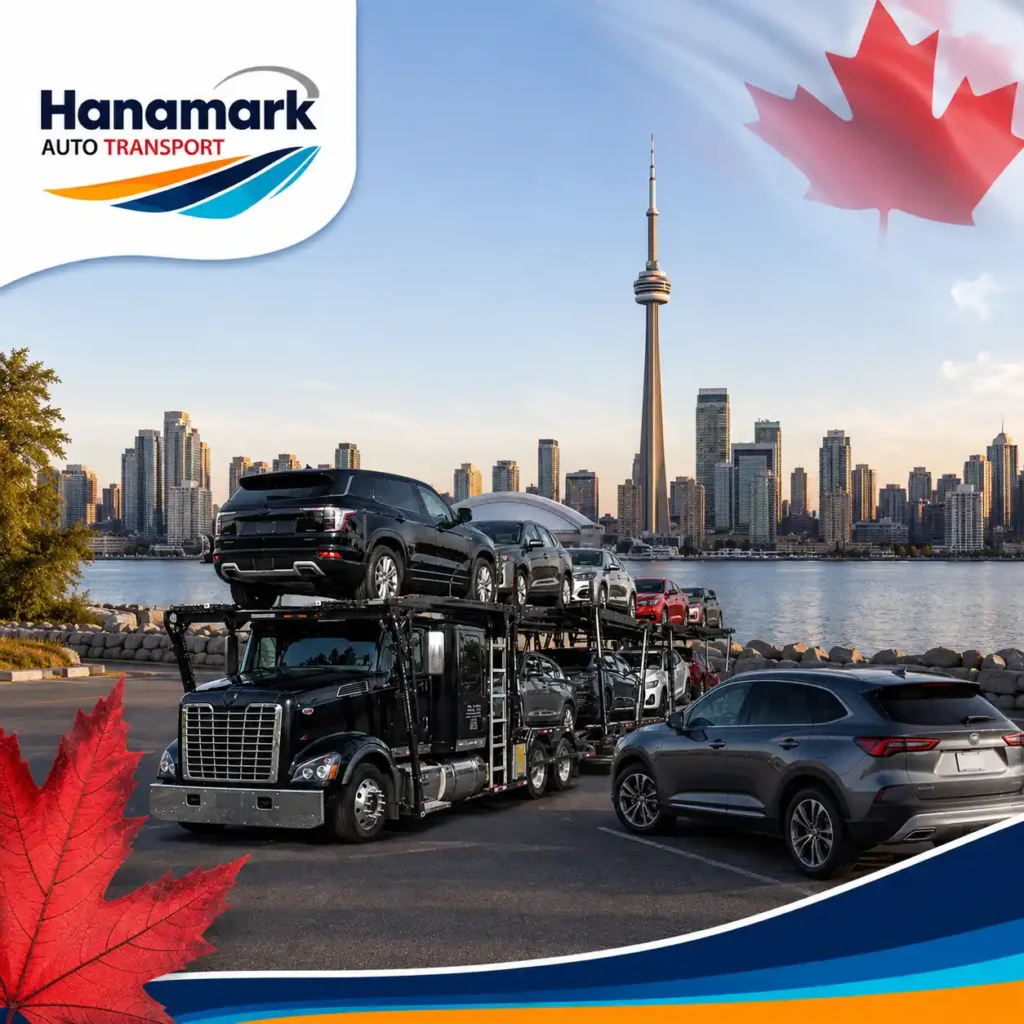
Key Routes for Vehicle Transport for New Immigrants in Canada
New Canadians settling in major cities use Hanamark for vehicle transport on all major interprovincial corridors:
- Ontario to Alberta – see our Ontario to Alberta car transport guide
- Calgary to Toronto – see our Calgary to Toronto route page
- Edmonton to Ottawa and Montreal – see our Edmonton to Ottawa and Montreal route page
- Regina to Toronto – see our Regina to Toronto route page
- Calgary to Ottawa and Montreal – see our Calgary to Ottawa and Montreal route page
Summary: Vehicle Transport for New Immigrants Canada – Choose a Direct Carrier You Can Verify
Vehicle transport for new immigrants in Canada is most safely and reliably arranged through a licensed direct carrier that provides verifiable credentials, all-inclusive transparent pricing, confirmed pickup scheduling, and direct communication throughout the process. New Canadians navigating the car shipping market for the first time are disproportionately exposed to scam operators, and the single most effective protection is booking with a carrier whose registration, insurance, and accountability you can verify independently before paying anything.
FAQ: Vehicle Transport for New Immigrants Canada
Yes. Interprovincial vehicle transport in Canada is available to anyone with a legally registered vehicle — including new permanent residents. You need your vehicle registration, proof of insurance, and valid identification. A licensed direct carrier handles the rest from pickup to delivery.
You need your provincial vehicle registration, your Canadian auto insurance policy, and a valid government-issued ID. The carrier provides the Bill of Lading at pickup, a condition report you complete jointly with the driver before your vehicle is loaded.
Ask for the carrier’s provincial registration number and verify it independently. Confirm cargo insurance coverage before paying. Pay by credit card where possible. Require a written, itemised contract before any payment. Book with a direct carrier that owns its trucks rather than a broker assigning your vehicle to an unknown third party after you pay.
Transit times depend on your specific route. Calgary to Toronto typically takes 6 to 9 business days on standard speed. Edmonton to Ottawa takes 7 to 12 days. Regina to Toronto takes 5 to 8 days. Your direct carrier confirms the estimated timeline at the time of booking.
🚗 New to Canada? Ship Your Vehicle With a Trusted Direct Carrier
Hanamark Auto Transport is a licensed direct open carrier, fully verified, cargo insured, and directly accountable for every vehicle we transport across Canadian provinces. Clear process. Direct communication. No brokers. No surprises.