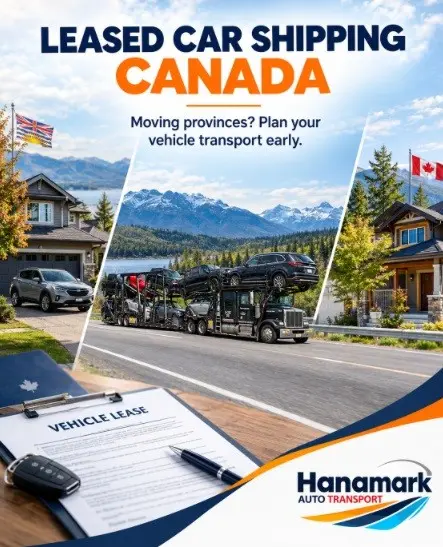
Leased Car Shipping Canada: How to Move a Leased Vehicle to Another Province
Did you know that 75,758 people moved between Canadian provinces and territories in the third quarter of 2025 alone? (Source: Statistics Canada, Canada’s population estimates, third quarter 2025: https://www150.statcan.gc.ca/n1/daily-quotidien/251217/dq251217b-eng.htm) Many of those households drive leased vehicles, and a lease adds extra steps that an owned car does not. The leasing company still holds title, so your move needs its approval before the vehicle crosses a provincial border.
This guide covers leased car shipping Canada drivers can plan with confidence: what makes a lease different, why approval and paperwork matter, and how to ship the vehicle step by step. It applies to individual drivers, employees on corporate relocations, and businesses with leased company vehicles.
What Is Leased Car Shipping Canada Drivers Need to Know?
Leased car shipping is the transport of a vehicle you drive but do not own outright. The lessor, usually a bank, captive finance company, or leasing firm, is the registered owner. You hold the right to use the vehicle under the terms of your lease.
How a Lease Changes the Process
Because the lessor owns the vehicle, it controls where the car can be registered and insured. Most lease agreements require you to notify the lessor before moving to another province. Some also limit how long a vehicle can stay outside its home province without re-registration.
Who Ships Leased Vehicles
Leased vehicle shipments are common for three groups:
- Individuals moving for work, school, or family. Our guide to moving across Canada with your car (https://hanamark.com/moving-across-canada-with-car-guide/) covers the wider relocation.
- Employees whose company is relocating them. See vehicle transport for corporate relocation in Canada (https://hanamark.com/vehicle-transport-corporate-relocation-canada/).
- Businesses moving leased fleet units between branches or offices.
Leasing vs Financing: Key Differences
A financed vehicle is registered in your name, even though a lender holds a lien. A leased vehicle is registered to the lessor. That difference is why lease holders need written approval and an authorization letter, while owners of financed vehicles usually only need to inform their lender.
Why Leased Car Shipping Canada Planning Starts With Your Lessor
Shipping a leased vehicle without the lessor’s knowledge can create registration and insurance problems at your destination.
Lessor Approval Protects Your Lease
Contact your leasing company as soon as your move date is set. Ask whether it permits the vehicle to be registered in your new province, what documents it will provide, and how long the approval takes. Some lessors issue a letter of authorization that you will need at the new province’s registry office.
Insurance and Registration Continuity
Your auto insurance usually needs to be updated or replaced when you become a resident of a new province. Ask your insurer when coverage must change and confirm the vehicle remains insured while it is in transit. Our article on car shipping insurance in Canada (https://hanamark.com/car-shipping-insurance-canada/) explains how carrier coverage and your own policy work together.
Why Shipping Protects Lease Value
Most leases include an annual kilometre allowance. Driving across Canada can add several thousand kilometres in one trip, which may lead to excess-kilometre charges at lease end. Shipping on an open carrier keeps the odometer reading unchanged and avoids road wear on a vehicle you plan to return.
How Leased Car Shipping Canada Moves Work, Step by Step
Use this sequence to keep your lease, insurance, and shipment aligned.
Step 1: Get Written Approval From the Lessor
Request written confirmation that the move is approved and ask for any authorization letter needed for registration. Keep a copy with your lease agreement.
Step 2: Gather Your Documents
Have your lease agreement, current registration, proof of insurance, and the lessor’s authorization ready. Our list of documents required for vehicle transport in Canada (https://hanamark.com/car-shipping-documentation-checklist-canada/) shows what the carrier needs at pickup.
Step 3: Book Your Open Carrier Transport
Request a quote with pickup and delivery addresses, vehicle details, and your preferred dates. A direct carrier like Hanamark assigns your vehicle to its own truck and driver, so there is no hand-off to a third party between booking and delivery.
Step 4: Prepare the Vehicle
Remove personal items, leave about a quarter tank of fuel, and photograph the vehicle from every angle. Lease returns are inspected closely, so clear photos help document condition. Follow our prepare your car for shipping checklist (https://hanamark.com/preparing-car-cross-canada-shipping-checklist/).
Step 5: Register in Your New Province
After delivery, complete the provincial safety inspection if required, then register the vehicle using the lessor’s authorization. For province-specific steps, read our guide to shipping a car to another province in Canada (https://hanamark.com/interprovincial-car-shipping/).
Regional Considerations for Leased Car Shipping Canada Routes
Each province sets its own rules for new residents, including inspection requirements and registration timelines. Long routes such as Ontario to British Columbia or Alberta to Atlantic Canada take more time in winter, so build a buffer between your move date and the date you need the vehicle. Book earlier during peak moving months in late spring and summer, when demand is highest.
Questions to Ask Your Leasing Company
Before booking, ask your lessor:
- Do you approve registering the vehicle in my new province?
- Will you provide a letter of authorization, and how long does it take?
- Are there fees for transferring registration?
- Does the move change my lease terms or end date?
Getting these answers in writing prevents delays at the registry office.
Frequently Asked Questions About Leased Car Shipping Canada
Do I need permission to ship a leased car to another province?
In most cases, yes. The leasing company is the legal owner, and most agreements require you to notify it before moving the vehicle to another province. Contact the lessor early and request written approval plus any authorization letter you will need to register the vehicle at your destination.
Will shipping my leased car affect my kilometre allowance?
Shipping on an open carrier adds no kilometres to the odometer, because the vehicle is loaded onto the truck rather than driven. This is one of the main reasons lease holders choose transport over a long cross-country drive that could push them past their annual allowance.
What documents does the carrier need for a leased vehicle?
The carrier typically needs the pickup and delivery contact details, vehicle information, and current registration and insurance. Keep your lease agreement and the lessor’s approval letter on hand as well, since your new province’s registry may ask for them.
Can my employer arrange shipping for a leased company car?
Yes. Many employers book vehicle transport as part of a relocation package. The company or relocation coordinator can request the quote and schedule pickup, while the driver confirms access to the vehicle and completes the condition inspection.
Summary: Leased Car Shipping Canada Key Takeaways
- The lessor owns the vehicle, so get written approval before moving provinces.
- Update insurance and plan registration in your new province early.
- Shipping preserves your kilometre allowance and reduces wear before lease return.
- Keep your lease agreement, registration, insurance, and authorization letter together.
- A direct carrier keeps your vehicle with one company from pickup to delivery.
Book Your Leased Car Shipping Canada Quote
Moving provinces with a leased vehicle? Hanamark Auto Transport is a licensed, insured direct carrier that ships leased cars across Canada on our own open carrier trucks, with clear communication from booking to delivery.
Request your free quote now: https://hanamark.com/quote/
Call: 306-737-3390
Email: info@hanamark.com