Car Delivery Inspection Canada: What to Check When Your Shipped Vehicle Arrives
Did you know that Canadians registered 1,852,738 new motor vehicles in 2024, an 8.0% increase from 2023? (Source: Statistics Canada, New motor vehicle registrations, fourth quarter 2024: https://www150.statcan.gc.ca/n1/daily-quotidien/250313/dq250313c-eng.htm) Add the used vehicles that change provinces every year, and thousands of drivers, dealers, and fleet managers receive a shipped vehicle every week. The few minutes you spend inspecting it at drop-off are some of the most important in the whole process.
This guide explains car delivery inspection Canada customers should complete: what it is, why it matters, and how to do it step by step.
What Is a Car Delivery Inspection Canada Carriers Perform?
A delivery inspection is a side-by-side check of your vehicle’s condition when it arrives, compared with the condition recorded at pickup. The comparison is based on the bill of lading, the shipping document the driver completes when your vehicle is loaded.
The Role of the Bill of Lading
The bill of lading records the vehicle’s details, pickup and delivery addresses, and any existing scratches, dents, or chips, often marked on a vehicle diagram. Both you and the driver sign it at pickup and again at delivery. Learn more in our guide to the car shipping bill of lading in Canada (https://hanamark.com/car-shipping-bill-of-lading-canada/).
Pickup Inspection vs Delivery Inspection
The pickup inspection sets the baseline. The delivery inspection confirms the vehicle arrived in the same condition. The two together create a clear, shared record. Preparing well before pickup makes both easier, so follow our prepare your car for shipping checklist (https://hanamark.com/preparing-car-cross-canada-shipping-checklist/).
Why Car Delivery Inspection Canada Customers Complete Matters
Signing the bill of lading at delivery confirms you accept the vehicle in the condition described.
It Protects Your Ability to Report Damage
Any new damage should be noted on the bill of lading before you sign. A clear written note at delivery is the strongest support for a claim. Our guide to car shipping damage claims in Canada (https://hanamark.com/car-shipping-damage-claims-canada/) explains what happens next if something is found.
It Builds Trust With Your Carrier
A careful inspection is routine, not confrontational. Professional drivers expect it and will walk the vehicle with you. With a direct carrier like Hanamark, the company that loaded your vehicle is the same company delivering it, so one team is accountable for the full trip.
Open Carrier Considerations
Vehicles on open carriers are exposed to weather and road dust, so a light layer of dirt on arrival is normal. Washing or wiping key panels before inspecting helps you see the actual paint condition. Read how open carrier auto transport works (https://hanamark.com/open-carrier-auto-transport/).
How to Complete a Car Delivery Inspection Canada Checklist
Use this sequence every time your vehicle is delivered.
Step 1: Choose Good Light
Inspect in daylight or under strong lighting. If the vehicle arrives after dark, use a flashlight and inspect panel by panel. Rain and snow can hide marks, so check wet areas carefully.
Step 2: Have Your Pickup Records Ready
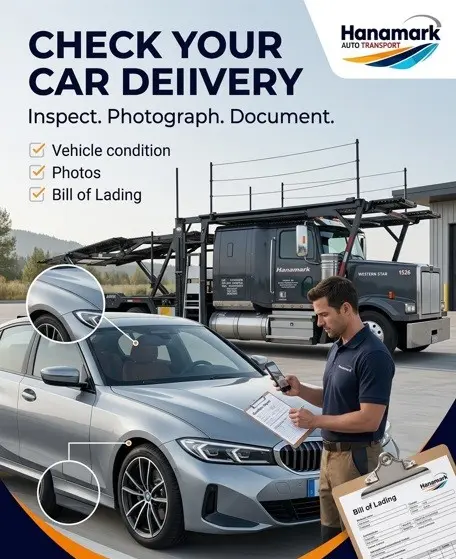
Bring your copy of the pickup bill of lading and the dated photos you took before shipping. Compare each panel against the diagram and your images.
Step 3: Walk the Exterior
Check the bumpers, hood, roof, doors, fenders, mirrors, and trunk. Look at the windshield and windows for chips or cracks, and check wheels and tires for curb marks or flat spots.
Step 4: Check Underneath and Inside
Look under the front and rear for fluid leaks or scrapes. Inside, confirm the dashboard shows no new warning lights, the odometer matches your records, and keys, fobs, and any accessories are present.
Step 5: Start the Vehicle
Start the engine or power on the EV. Confirm it runs as it did at pickup. Short test movements are fine if the delivery area allows.
Step 6: Note Findings, Then Sign
If you find new damage, describe it on the bill of lading and photograph it before the driver leaves. If everything matches, sign and keep your copy.
What to Photograph at Delivery
Take a consistent set of photos: all four corners, both sides, the roof, the windshield, each wheel, the odometer, and any area noted on the bill of lading. Matching the angles of your pickup photos makes comparison quick and clear.
Car Delivery Inspection Canada Tips for Dealers and Fleets
Dealerships and fleet managers often receive several vehicles at once, which makes a consistent routine essential.
Use a Standard Receiving Process
Assign one staff member to receive deliveries, inspect each unit against its bill of lading, and file photos by stock or unit number. Consistent records speed up reconditioning and protect inventory value.
Seasonal and Regional Factors
In winter, salt spray and slush can cover vehicles on routes across the Prairies, Ontario, and Atlantic Canada. Allow time to clear snow or rinse panels before inspection. For more on how carriers protect vehicles in transit, see is vehicle transport safe in Canada (https://hanamark.com/is-vehicle-transport-safe-canada/).
Electric and High-Value Vehicles
For EVs, confirm the charge level and that the charging cable and adapters are included. For newer or high-value vehicles, check paint closely along lower panels and wheel arches, where road debris is most likely to reach.
Frequently Asked Questions About Car Delivery Inspection Canada
How long should a delivery inspection take?
A thorough inspection of a single vehicle usually takes about 10 to 15 minutes. Dealers receiving several units should allow more time. Taking a few extra minutes is worthwhile, since your signature confirms the vehicle’s condition at delivery.
What if my car arrives dirty?
Light dirt and road dust are normal on open carrier shipments. Wipe or rinse the main panels before inspecting so scratches are not hidden. Dirt itself is not damage, but it can conceal marks you need to see.
What should I do if I find new damage?
Write a clear description of the damage on the bill of lading before signing, take dated photos with the driver present, and contact the carrier promptly to start the claim process. Keep your pickup photos and paperwork together.
Can someone else inspect and accept the vehicle for me?
Yes. You can authorize a trusted person to receive the vehicle. Give them your pickup bill of lading and photos, explain this checklist, and let the carrier know their name in advance.
Should I inspect the vehicle even if it looks fine?
Yes. Some marks, such as small chips or scrapes on lower panels, are easy to miss at a glance. A full walkaround protects you and confirms the vehicle arrived as expected.
Summary: Car Delivery Inspection Canada Key Takeaways
- Compare the vehicle with the pickup bill of lading and your own dated photos.
- Inspect in good light and clean dusty panels first.
- Check the exterior, underside, interior, odometer, and keys.
- Note any new damage on the bill of lading before signing.
- Dealers and fleets benefit from a standard receiving routine.
Ship With a Car Delivery Inspection Canada Customers Can Trust
Want a shipment with clear condition reports at pickup and delivery? Hanamark Auto Transport is a licensed, insured direct carrier that moves vehicles across Canada on our own open carrier trucks, with one team responsible from start to finish.
Request your free quote now: https://hanamark.com/quote/
Call: 306-737-3390
Email: info@hanamark.com